The Cocoa Paradox: Why Collective Action is Essential for a Sustainable Future
Chocolate is one of the world's most beloved treats. It's also one of its most troubling supply chains.
While more than half of all cocoa is grown in just two West African countries — Côte d'Ivoire and Ghana — it is estimated that only 10–20% of farming households there earn a living income. A large proportion of cocoa farming households live below the World Bank's poverty line.[1]
A systemic risk
There is broad stakeholder consensus that this is unsustainable. A living income — sufficient to cover a decent standard of living for farmers and their families — is widely recognised as a baseline requirement, not an aspiration.
The urgency of this is underscored by a striking paradox: cocoa prices have reached historic highs over the past two years, yet farmer incomes have seen little improvement.The consequences are compounding. Without adequate earnings, farmers cannot invest in their land or build resilience against climate change. And with returns this low, the next generation has little reason to enter the sector — creating a long-term supply risk the industry cannot afford to ignore.
ARI’s Cocoa Program
Addressing the problem starts with measuring it accurately. The Anker Research Institute is providing technical support to Professor Daniel Sarpong of the University of Ghana and Dr Yapo N'Guessan of the Ivorian Centre for Economic and Social Research (CIRES) to produce robust living income estimates for cocoa-growing regions in both countries. The work forms part of a broader partnership with the Living Income Community of Practice (LICoP) and cocoa industry actors to provide Anker Methodology estimates for the 13 countries that produce most of the world's cocoa.
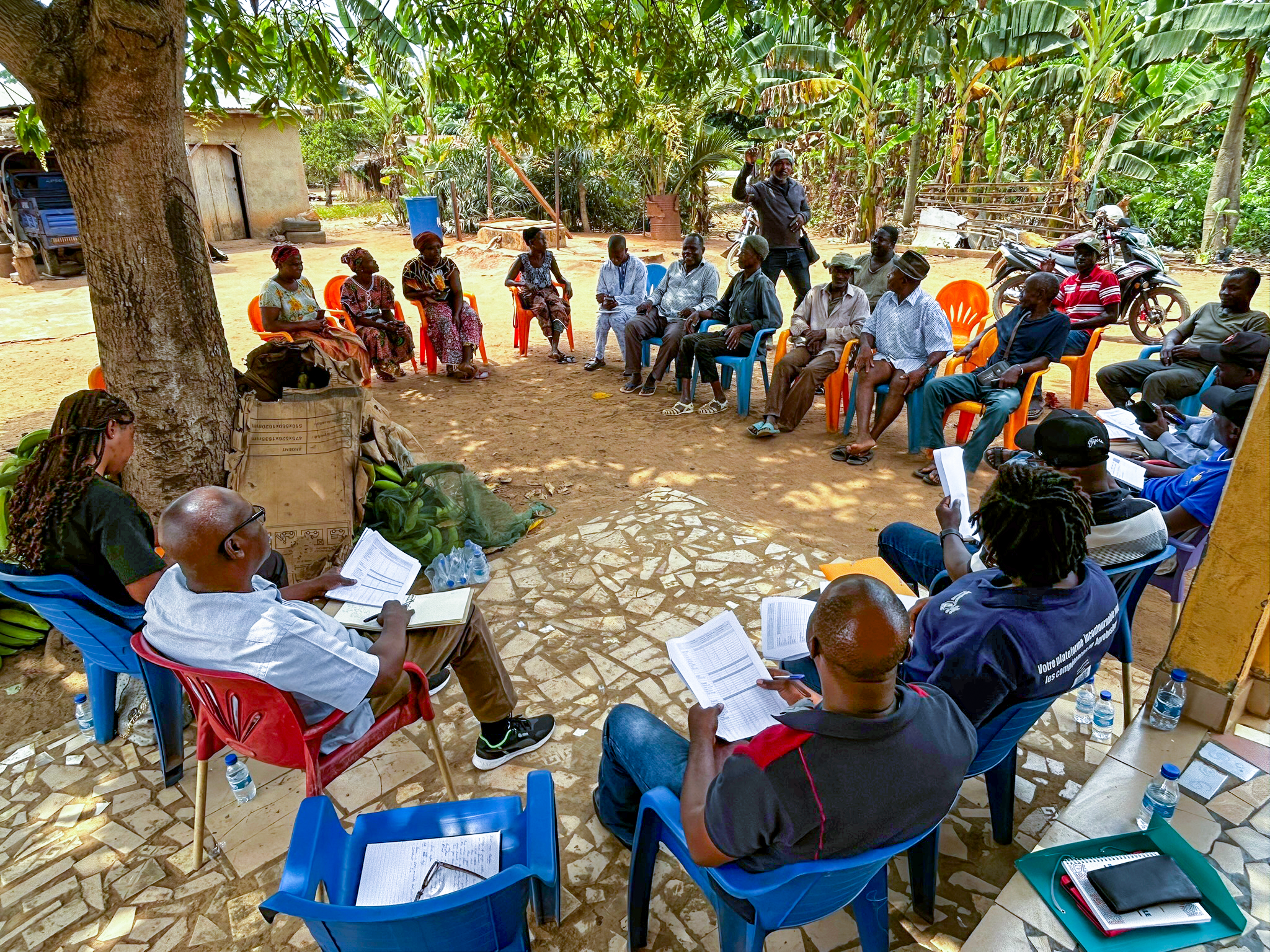
In December 2025, stakeholder workshops convened national Cocoa Boards, farmer organisations, industry representatives, government agencies, certification bodies, international organizations and NGOs to align on the study's purpose and methodology. From February to March 2026, the research teams visited cocoa-growing regions to engage with farmers and gather data on the costs of food, housing, education, healthcare and other essentials. Analysis is now underway. Preliminary findings will be presented at further stakeholder workshops in mid-2026, and the final reports published later in the year.
[1] van Vliet, J.A., Slingerland, M.A., Waarts, Y.R. & Giller, K.E. (2021). "A Living Income for Cocoa Producers in Côte d'Ivoire and Ghana?" Frontiers in Sustainable Food Systems, Vol. 5, Article 732831. DOI: 10.3389/fsufs.2021.732831
For more information on ARI’s Cocoa Program, contact Sally Smith, Senior Researcher, ssmith@ankerinstitute.org